





Understanding FDA cleanroom requirements can be challenging because the FDA does not regulate pharmaceutical cleanrooms through one standalone cleanroom standard. Instead, regulatory expectations are established through current Good Manufacturing Practice (cGMP) regulations — particularly 21 CFR Parts 210 and 211 — along with FDA guidance for sterile and aseptic manufacturing.
Together, these FDA facility requirements influence how pharmaceutical cleanrooms are designed, operated, monitored, cleaned, maintained, qualified, and documented.
For manufacturers, the goal is not simply to achieve an ISO classification. An effective FDA compliance cleanroom strategy should demonstrate that the facility and its controls are appropriate for the product and process, reduce contamination and mix-up risks, and remain capable of operating in a controlled state over time.
For organizations developing regulated manufacturing environments, AES Clean Technology provides BioPharma cleanroom solutions for applications ranging from early-stage R&D through full cGMP manufacturing. For a broader foundation on facility compliance, see our guide to designing for cGMP compliance.
Key Takeaways
- FDA cleanroom requirements come primarily from 21 CFR Part 211 and applicable FDA guidance rather than one standalone FDA cleanroom standard.
- FDA facility requirements address layout, material flow, cleanable surfaces, HVAC, filtration, sanitation, environmental monitoring, and contamination prevention.
- For aseptic processing, FDA guidance identifies ISO 5 cleanroom conditions for critical areas where sterile product or sterile product-contact surfaces are exposed.
- ISO classification is important, but it does not by itself establish FDA or cGMP compliance.
- Pharmaceutical cleanroom compliance depends on facility design, contamination control, personnel practices, HVAC, environmental monitoring, maintenance, and documentation working together.
- FDA compliance should be considered from initial planning through qualification, operation, maintenance, and change control.
On This Page
- What Are FDA Cleanroom Requirements?
- Key FDA Facility Requirements
- FDA Cleanroom Classification and Aseptic Processing Expectations
- HVAC, HEPA Filtration, and Pressure Control
- Cleaning, Sanitation, and Contamination Control
- Cleanroom Environmental Monitoring
- FDA Cleanroom Compliance Checklist
- Download the FDA Cleanroom Compliance Checklist
- Common FDA Compliance Risks
- Maintaining FDA Cleanroom Compliance Over Time
- The Bottom Line: FDA Compliance Is About Demonstrated Control
- FAQ: FDA Cleanroom Requirements
- Sources
What Are FDA Cleanroom Requirements?
FDA cleanroom requirements are the regulatory and quality expectations that apply to controlled pharmaceutical manufacturing environments under cGMP.
Rather than prescribing one universal cleanroom layout or classification, FDA regulations require facilities to be suitable for their intended manufacturing operations and capable of preventing contamination and mix-ups.
Under 21 CFR 211.42, pharmaceutical buildings must provide suitable size, construction, and location for cleaning, maintenance, and proper operations. Facilities must also provide adequate space and appropriately designed flows for equipment, materials, components, in-process materials, and finished drug products.
For aseptic processing areas, FDA requirements specifically address:
- Smooth, hard, easily cleanable floors, walls, and ceilings
- Temperature and humidity controls
- HEPA-filtered air
- Appropriate pressure relationships
- Environmental monitoring
- Cleaning and disinfection
- Maintenance of systems used to control aseptic conditions
These cGMP cleanroom requirements demonstrate why pharmaceutical compliance depends on much more than achieving a specific airborne particle count.
For a deeper explanation of current Good Manufacturing Practice, see AES’s guide to cGMP vs GMP in cleanrooms.
Key FDA Facility Requirements
- Suitable Facility Design and Space
A pharmaceutical cleanroom should be sized and arranged so manufacturing operations can occur without creating unnecessary contamination, cross-contamination, or mix-up risks.
Facility planning should consider:
- Equipment placement
- Personnel movement
- Material movement
- Gowning
- Staging and storage
- Waste
- Cleaning
- Maintenance access
The physical facility should support the manufacturing process rather than force operators to compensate for poor design.
AES’s architectural cleanroom design services integrate regulatory requirements, process flow, cleanroom classifications, and operator needs during early facility design.
- Controlled Personnel and Material Flow
Personnel and material flow are important components of FDA facility requirements because poor movement patterns can create avoidable contamination and mix-up risks.
A cleanroom design should clearly establish:
Personnel flow:
Entry → gowning → controlled transition → processing → exit
Material flow:
Receiving → staging → cleaning or decontamination → controlled transfer → manufacturing → removal
Waste, dirty equipment, maintenance activities, and product movement should also be evaluated so cleaner workflows remain protected.
AES Compass™ conceptual facility planning helps teams establish GMP zoning, cleanroom classifications, HVAC requirements, equipment relationships, and operational flows early in project development.
- Cleanable Facility Construction
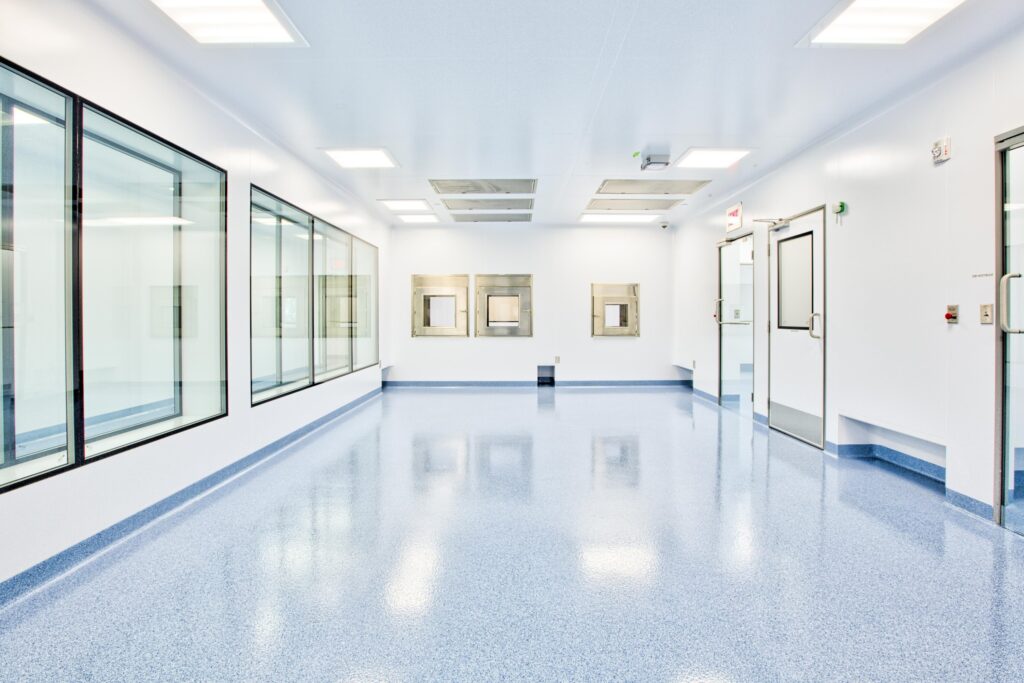
A pharmaceutical cleanroom should support repeated cleaning and disinfection without degradation of the controlled environment.
For aseptic processing environments, FDA requirements specifically address smooth, hard, easily cleanable surfaces.
Design teams should minimize:
- Cracks and gaps
- Difficult-to-clean joints
- Particle traps
- Unsealed penetrations
- Excessive ledges
- Inaccessible corners
- Materials that degrade under disinfectants
AES’s modular cleanroom walls and ceilings use cleanable modular systems and sealed transitions designed for regulated cleanroom environments. For facilities integrating a complete modular envelope, AES Box™ modular architectural systems combine cleanroom walls, ceilings, doors, filtration interfaces, and other architectural components into an integrated system.
FDA Cleanroom Classification and Aseptic Processing Expectations
FDA aseptic processing requirements become especially important when sterilized products, containers, closures, or product-contact surfaces are exposed during manufacturing.
FDA guidance identifies ISO 5 conditions for critical aseptic processing areas.
The area immediately surrounding the aseptic processing line should generally meet at least ISO 7 under dynamic conditions, while ISO 8 environments may be appropriate for certain less-critical supporting activities.
However, FDA cleanroom classification should never be treated as the entire compliance strategy.
An aseptic processing cleanroom should also consider:
- Unidirectional airflow
- Operator positioning
- Manual interventions
- Equipment placement
- Material transfers
- Personnel gowning
- Airlocks
- Cleaning and disinfection
- Pressure relationships
- Environmental monitoring
FDA’s expectations focus on maintaining control over the entire sterile manufacturing process and environment, rather than merely passing an ISO classification test.
AES’s cleanroom ISO classification resource provides additional guidance on how ISO classifications influence facility layout, HVAC, containment, and cleanroom design.
HVAC, HEPA Filtration, and Pressure Control
HVAC is a major component of pharmaceutical cleanroom compliance.
Under 21 CFR 211.46, pharmaceutical facilities must provide adequate ventilation and, where appropriate, equipment capable of controlling:
- Air pressure
- Microorganisms
- Dust
- Humidity
- Temperature
For aseptic processing, HEPA filtration, directional airflow, and appropriate pressure relationships are fundamental contamination-control measures.
Cleanroom HVAC design should address:
- Supply and return locations
- Airflow patterns
- Pressure cascades
- HEPA filtration
- Equipment and personnel heat loads
- Temperature and humidity
- Room recovery
- Door operation
- Process exhaust
- Monitoring and alarms
The HVAC system should be designed around the manufacturing process and contamination risks rather than treated as a generic building system.
AES’s cleanroom engineering services integrate airflow dynamics, utilities, mechanical systems, architecture, and process requirements for regulated environments.
Cleaning, Sanitation, and Contamination Control
FDA regulations require pharmaceutical facilities to be maintained in a clean and sanitary condition.
An FDA compliance cleanroom should therefore support documented cleaning, sanitation, and contamination-control practices throughout its operating life.
Facility planning should consider:
- Surface cleanability
- Disinfectant compatibility
- Cleaning access
- Sealed penetrations
- Equipment accessibility
- Waste removal
- Microbiological contamination control
- Preventive maintenance
- Change control
Under 21 CFR 211.113, manufacturers must establish and follow written procedures designed to prevent objectionable microorganisms in nonsterile products and microbiological contamination of products purporting to be sterile.
Facility design is therefore directly connected to contamination prevention.
AES’s resource on cleanroom cleaning and disinfection explores how construction materials and cleanroom design can support effective cleaning and disinfection programs.
Cleanroom Environmental Monitoring
Cleanroom environmental monitoring helps demonstrate that a controlled pharmaceutical manufacturing environment continues to perform as intended.
Depending on the product and process, monitoring may include:
- Nonviable airborne particles
- Viable air sampling
- Surface monitoring
- Personnel monitoring
- Differential pressure
- Temperature
- Humidity
- Alarm conditions
- Trend analysis
Monitoring locations should be risk-based and reflect the manufacturing process.
Critical product exposure points, operator interventions, material transfers, airflow relationships, and equipment interfaces should influence monitoring strategy.
Environmental monitoring should also be considered during cleanroom design. Sensor locations, sampling access, calibration requirements, wiring, data collection, and maintenance should not be added as afterthoughts.
FDA Cleanroom Compliance Checklist
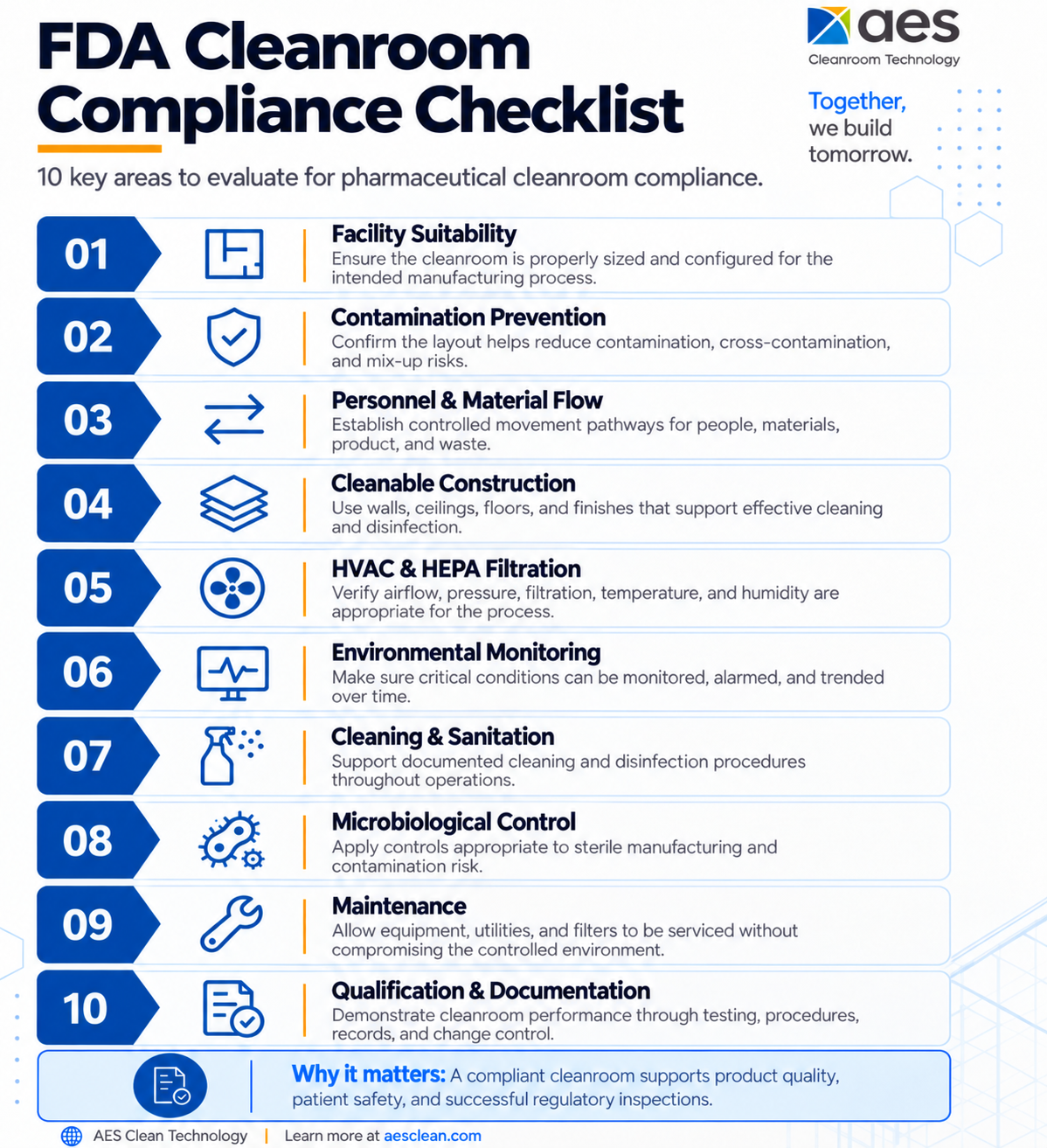
When evaluating a pharmaceutical cleanroom against FDA expectations, confirm that the facility addresses:
- Facility suitability— Is the cleanroom appropriately sized and configured for its intended pharmaceutical manufacturing process?
- Contamination prevention— Does the layout minimize contamination, cross-contamination, and mix-up risks?
- Personnel and material flow— Are movement pathways clearly defined and controlled?
- Cleanable construction— Are walls, ceilings, floors, penetrations, and finishes suitable for cleaning and disinfection?
- HVAC and HEPA filtration— Are ventilation, airflow, pressure, filtration, temperature, and humidity appropriate for the process?
- Environmental monitoring— Can critical cleanroom conditions be effectively monitored and trended?
- Cleaning and sanitation— Does the facility support documented cleaning and disinfection procedures?
- Microbiological control— Are controls appropriate for the product and sterile manufacturing risk?
- Maintenance— Can filters, equipment, sensors, utilities, and facility systems be serviced without compromising control?
- Qualification and documentation— Can cleanroom performance and ongoing compliance be demonstrated through testing, records, procedures, qualification, and change control?
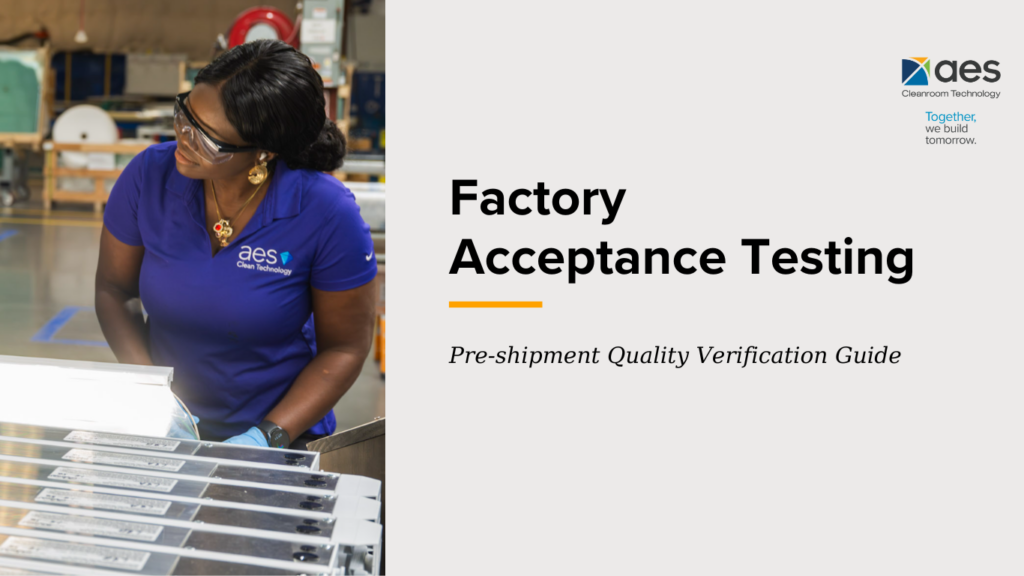
For pre-shipment verification of modular cleanroom systems and components, AES’s Factory Acceptance Testing guide explains how FAT can support quality control and downstream qualification readiness.
Download the FDA Cleanroom Compliance Checklist
Use this 10-point FDA cleanroom compliance checklist as a quick reference for evaluating facility design, contamination control, HVAC and HEPA filtration, environmental monitoring, cleaning, maintenance, and qualification requirements.
The checklist is designed to help pharmaceutical and sterile manufacturing teams identify critical facility considerations early and support a more consistent approach to FDA compliance throughout the cleanroom lifecycle.
Common FDA Compliance Risks
FDA cleanroom compliance problems often result from several weaknesses occurring together rather than one isolated facility issue.
Common risks include:
- Assuming ISO certification equals FDA compliance
- Poor personnel or material flow
- Insufficient space for aseptic operations
- Inadequate separation of activities
- Difficult-to-clean surfaces
- Weak pressure relationships
- Airflow disrupted by equipment or personnel
- Excessive manual interventions
- Inadequate environmental monitoring
- Poor maintenance access
- Weak cleaning and sanitation procedures
- Facility changes without appropriate change control
- Incomplete qualification or supporting documentation
- Failure to investigate recurring contamination trends
Recent FDA enforcement continues to focus on many of these same fundamentals. In a September 2026 Warning Letter involving aseptic operations, FDA specifically called for evaluation of human interactions in ISO 5 areas, equipment suitability, cleanroom space, airflow, facility layout, and personnel and material flow.
AES’s on-demand resource, Lessons Learned from FDA 483s and Warning Letters, examines real cleanroom compliance failures and the facility-design decisions that can help reduce contamination risk.
Maintaining FDA Cleanroom Compliance Over Time
FDA compliance does not stop after cleanroom qualification.
Filters, seals, sensors, doors, mechanical systems, and facility finishes require ongoing inspection and maintenance. Process changes and equipment modifications should also be evaluated through formal change control to determine whether they affect airflow, classification, contamination control, qualification, or operating procedures.
A proactive cleanroom maintenance and service program can help protect facility performance and reduce the risk of gradual deterioration affecting the controlled environment.
The Bottom Line: FDA Compliance Is About Demonstrated Control
Meeting FDA cleanroom requirements is not simply a matter of achieving an ISO classification or installing HEPA filters.
FDA expectations require manufacturers to demonstrate that their facilities, processes, environmental controls, cleaning systems, monitoring programs, maintenance practices, and quality procedures work together to protect product quality.
A strong FDA cleanroom compliance strategy should therefore address:
- Facility design
- Manufacturing flow
- Cleanability
- HVAC and HEPA filtration
- Contamination control
- Cleanroom environmental monitoring
- Sanitation
- Microbiological control
- Maintenance
- Qualification and documentation
The most effective approach is to incorporate these requirements during facility planning rather than attempting to correct compliance gaps after construction.
For organizations planning a new regulated manufacturing facility, AES Faciliflex® turnkey cleanrooms integrate cleanroom design, engineering, HVAC, manufacturing, and construction into a coordinated delivery model.
To discuss a new pharmaceutical cleanroom, expansion, retrofit, or facility conversion, contact AES Clean Technology.
FAQ: FDA Cleanroom Requirements
Does the FDA have specific cleanroom requirements?
Yes, but FDA cleanroom expectations are not contained within one standalone standard. Requirements are established through cGMP regulations, including 21 CFR Parts 210 and 211, along with applicable FDA guidance for pharmaceutical and aseptic manufacturing.
What are the main FDA facility requirements for cleanrooms?
Key FDA facility requirements include suitable facility construction and space, contamination-preventive flows, cleanable surfaces, appropriate ventilation and filtration, environmental controls, sanitation, monitoring, maintenance, and process-specific contamination controls.
What ISO class does the FDA require for aseptic processing?
FDA guidance identifies ISO 5 cleanroom conditions for critical areas where sterilized product, containers, closures, or product-contact surfaces are exposed during aseptic processing. The immediately surrounding area generally should meet at least ISO 7 under dynamic conditions.
Is an ISO-certified cleanroom automatically FDA compliant?
No. ISO classification demonstrates a level of airborne particle cleanliness, but FDA compliance also requires appropriate facility design, contamination control, environmental monitoring, cleaning, microbiological control, documentation, maintenance, and cGMP quality systems.
What does an FDA compliance cleanroom need to include?
An FDA compliance cleanroom should be appropriate for its intended process and may require controlled personnel and material flows, cleanable surfaces, HEPA filtration, pressure control, environmental monitoring, cleaning and disinfection systems, maintenance programs, qualification, and documentation.
Does FDA require HEPA filtration?
For aseptic processing areas, 21 CFR 211.42 addresses air supplied through HEPA filters under positive pressure. Filtration requirements for other pharmaceutical manufacturing areas depend on the process and contamination risks.
Does FDA require environmental monitoring in cleanrooms?
For aseptic processing areas, FDA regulations specifically require a system for monitoring environmental conditions. Monitoring programs should be designed around process risks, contamination hazards, and applicable regulatory expectations.
What is the difference between FDA requirements and ISO 14644?
ISO 14644 primarily addresses cleanroom classification and related performance requirements. FDA cGMP requirements extend beyond particle classification to facility design, contamination prevention, microbiological control, sanitation, documentation, maintenance, and the broader pharmaceutical quality system.
How can cleanroom design help support FDA compliance?
Cleanroom design can support FDA compliance by creating controlled personnel and material flows, appropriate HVAC and pressure relationships, cleanable surfaces, accessible monitoring locations, contamination-control features, and maintainable systems from the beginning of the project.
Sources
- FDA — Current Good Manufacturing Practice Regulations
- FDA — Sterile Drug Products Produced by Aseptic Processing: Current Good Manufacturing Practice
- eCFR — 21 CFR § 211.42: Design and Construction Features
- eCFR — 21 CFR § 211.46: Ventilation, Air Filtration, Air Heating and Cooling
- eCFR — 21 CFR § 211.56: Sanitation
- eCFR — 21 CFR § 211.67: Equipment Cleaning and Maintenance
- eCFR — 21 CFR § 211.113: Control of Microbiological Contamination
- FDA — Process Validation: General Principles and Practices
- FDA — Bausch & Lomb Inc. Warning Letter, September 4, 2026