




Designing for cGMP compliance requires more than building a clean space or selecting an ISO classification. In pharmaceutical, biotechnology, life science, cell and gene therapy, medical device, and advanced manufacturing environments, the cleanroom facility itself becomes part of the quality system.
A cGMP compliant facility must support product quality, contamination control, environmental monitoring, documentation, cleaning, maintenance, and long-term operational performance. For teams planning a new cGMP facility or upgrading an existing cleanroom, the design phase is one of the most important opportunities to reduce compliance risk.
The strongest cleanroom projects do not begin with the question, “What ISO class do we need?” They begin with a more strategic question:
How should the facility be designed to support the product, process, people, contamination control strategy, and current regulatory expectations over time?
For organizations beginning that process, AES Cleanroom Technology provides modular cleanroom solutions for regulated life science and advanced technology environments.
Key Takeaways
- cGMP compliance starts during facility planning, not after cleanroom construction is complete.
- A cGMP cleanroom should support contamination control, process flow, HVAC performance, environmental monitoring, documentation, and lifecycle maintenance.
- ISO classification is important, but it does not automatically make a facility cGMP compliant.
- The strongest cGMP facility designs align layout, materials, HVAC, validation, and operational workflows from the beginning.
- Modular cleanroom design can help support scalability, cleanability, speed to deployment, and long-term facility performance.
What Is cGMP Compliance?
cGMP compliance refers to the systems, facilities, controls, procedures, and documentation needed to meet current Good Manufacturing Practice expectations. In the United States, cGMP requirements are reflected in FDA regulations, including 21 CFR Parts 210 and 211. For a broader breakdown of how cGMP differs from traditional GMP in cleanroom environments, our related resource on cGMP vs GMP in cleanrooms explains why the “current” standard matters for facility design, contamination control, validation, and long-term performance.
In cleanroom environments, cGMP compliance typically involves:
- Facility layout and cleanroom zoning
- Personnel, material, equipment, and waste flows
- HVAC design, airflow, and pressure cascades
- Temperature and humidity control
- Cleanable walls, ceilings, doors, and finishes
- Environmental monitoring
- Cleaning and disinfection
- Qualification, validation, and documentation
- Preventive maintenance and lifecycle service
A cGMP cleanroom can meet an ISO particle classification and still fall short if the facility does not properly support contamination control, documentation, cleaning, material transfer, or day-to-day operations.
What Makes a Facility cGMP Compliant?
A cGMP compliant facility is designed, built, operated, and maintained to support consistent product quality. The facility should reduce the risk of contamination, cross-contamination, mix-ups, process disruptions, and quality failures.
A strong cGMP environment considers:
- What product will be manufactured
- Whether the process is sterile, aseptic, low bioburden, non-sterile, or highly potent
- How personnel, materials, equipment, product, and waste move through the facility
- What contaminants pose the greatest risk
- How the HVAC system supports airflow and pressure control
- How surfaces will be cleaned and disinfected
- How monitoring and documentation will be performed
- How the facility can support future growth or process changes
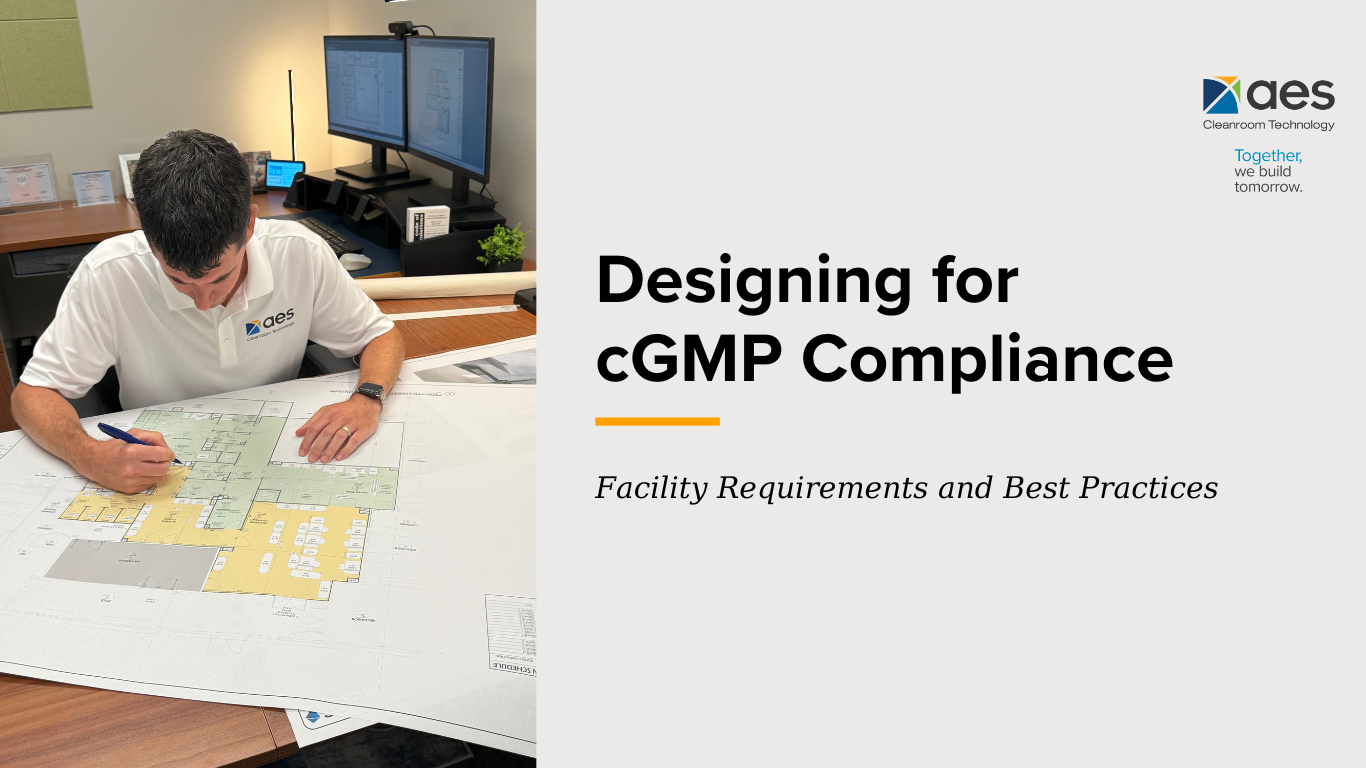
Early planning is critical. AES Compass™ conceptual facility planning helps teams evaluate cleanroom classifications, GMP zoning strategies, airflow needs, process requirements, and operational flow before detailed design and construction begin.
Key cGMP Facility Requirements
Every cGMP facility should be designed around its intended use. A cleanroom for aseptic processing may require different controls than a cleanroom for medical device assembly, biologics manufacturing, oral solid dose production, packaging, or advanced therapy manufacturing.
Still, most cGMP cleanroom requirements fall into several core areas.
- Facility Layout and Process Flow
Layout is one of the most important cGMP design decisions. A cleanroom should support efficient production while reducing contamination and operational risk.
A strong layout clearly defines the movement of:
- Personnel
- Raw materials and components
- Equipment
- Product
- Waste
- Samples
- Cleaning supplies
- Maintenance tools
Poor flow can create unnecessary risk. If personnel and materials cross paths, if waste moves through cleaner areas, or if maintenance access disrupts controlled zones, the facility becomes harder to operate and defend during inspection.
The layout should address gowning, material transfer, airlocks, pass-throughs, waste removal, equipment access, and future expansion. For pharmaceutical and biotechnology applications, AES’s BioPharma cleanroom solutions support specialized environments for complex workflows, including aseptic processing zones, pressure cascading, and scalable layouts.
- Cleanroom Classification and Zoning
Cleanroom classification is important, but ISO classification alone does not make a facility cGMP compliant. ISO classifications define airborne particle cleanliness, while cGMP compliance also includes contamination control, documentation, quality systems, process support, and ongoing monitoring.
A cGMP facility may include multiple zones, such as:
- Gowning rooms
- Personnel airlocks
- Material airlocks
- Processing suites
- Support corridors
- Equipment wash areas
- Staging rooms
- Packaging areas
- Utility and service spaces
Each zone should be designed around product risk, process requirements, and contamination control needs. For life science organizations working across regulated production, diagnostics, and research applications, AES’s Life Science cleanroom solutions support controlled environments built around cleanliness, control, and adaptability.
- HVAC, Airflow, and Pressure Control
HVAC is one of the most important systems in any cGMP cleanroom. It affects particle control, microbial control, temperature, humidity, room recovery, pressure relationships, and process stability.
A cGMP-focused HVAC strategy should consider:
- Air change rates
- HEPA or ULPA filtration
- Airflow patterns
- Room recovery expectations
- Temperature and humidity setpoints
- Pressure differentials
- Equipment and personnel heat loads
- Process exhaust
- Monitoring and alarms
- Maintenance access
Pressure cascades are especially important. Positive pressure may protect clean areas from less-clean spaces, while negative pressure may be required for containment applications. The goal is not just to create pressure differentials, but to create a controlled airflow strategy that supports the contamination control needs of the process.
AES’s Faciliflex® turnkey modular cleanrooms integrate cleanroom delivery with HVAC coordination to help streamline complex facility projects.
- Contamination Control Strategy
A cGMP cleanroom should be designed to support a clear contamination control strategy. This is especially important in sterile manufacturing, aseptic processing, biologics, cell and gene therapy, and other high-risk manufacturing environments.
Contamination control should address:
- Airborne particles
- Microorganisms
- Cross-contamination
- Residues
- Personnel-borne contamination
- Material-borne contamination
- Equipment-related risks
- Cleaning and disinfectant effectiveness
- Maintenance-related risks
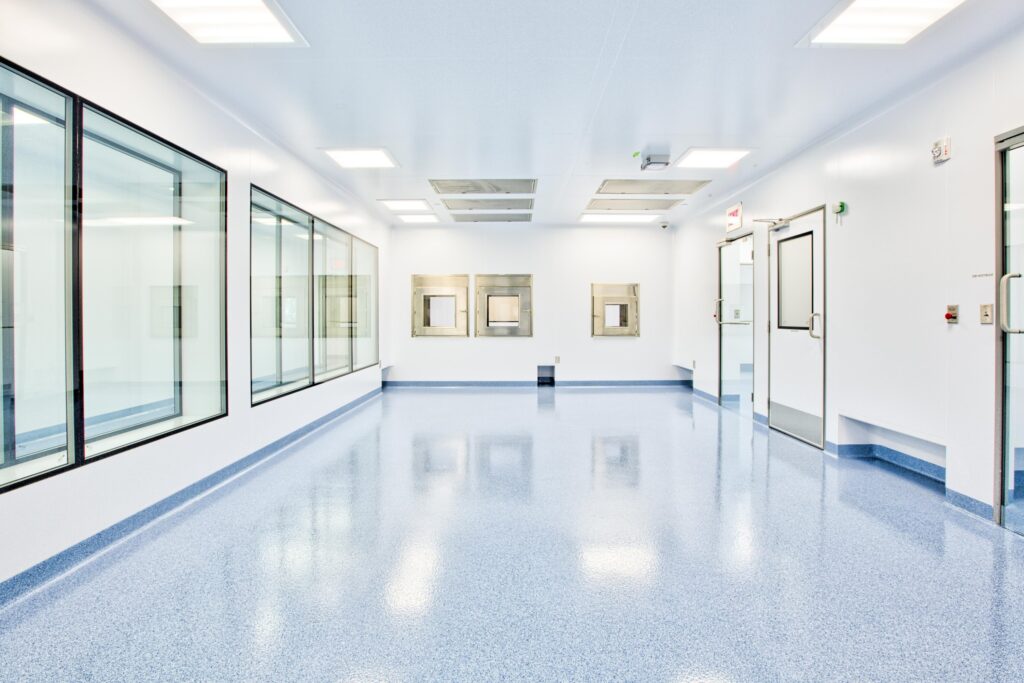
Facility design plays a direct role in contamination control. Proper gowning rooms, airlocks, pass-throughs, pressure relationships, cleanable surfaces, sealed penetrations, and monitoring locations all help support a controlled cGMP environment.
Cleanroom construction materials are also important. AES’s resource on modular cleanroom cleaning and disinfection explores how cleanroom design, construction techniques, and material selection can influence cleanability, disinfection, schedule, quality, and lifecycle cost.
- Cleanable Materials and Modular Construction
A cGMP environment must be cleanable, durable, and compatible with routine cleaning and disinfection. Materials should reduce contamination harborage points and maintain performance over time.
Key material considerations include:
- Smooth, cleanable surfaces
- Resistance to cleaning agents and disinfectants
- Sealed joints and penetrations
- Minimal ledges and horizontal surfaces
- Low particle generation
- Durability under routine operations
- Compatibility with temperature and humidity needs
Modular cleanroom systems can support cGMP facility goals by improving consistency, reducing site disruption, accelerating installation, and allowing for future adaptability. AES’s modular cleanroom walls and ceilings support retrofits, expansions, and new construction with cleanroom-ready finishes and controlled manufacturing consistency.
- Personnel Gowning and Material Transfer
People and materials are two of the most common sources of contamination. A cGMP compliant facility should make proper gowning and material movement clear, repeatable, and easy to follow.
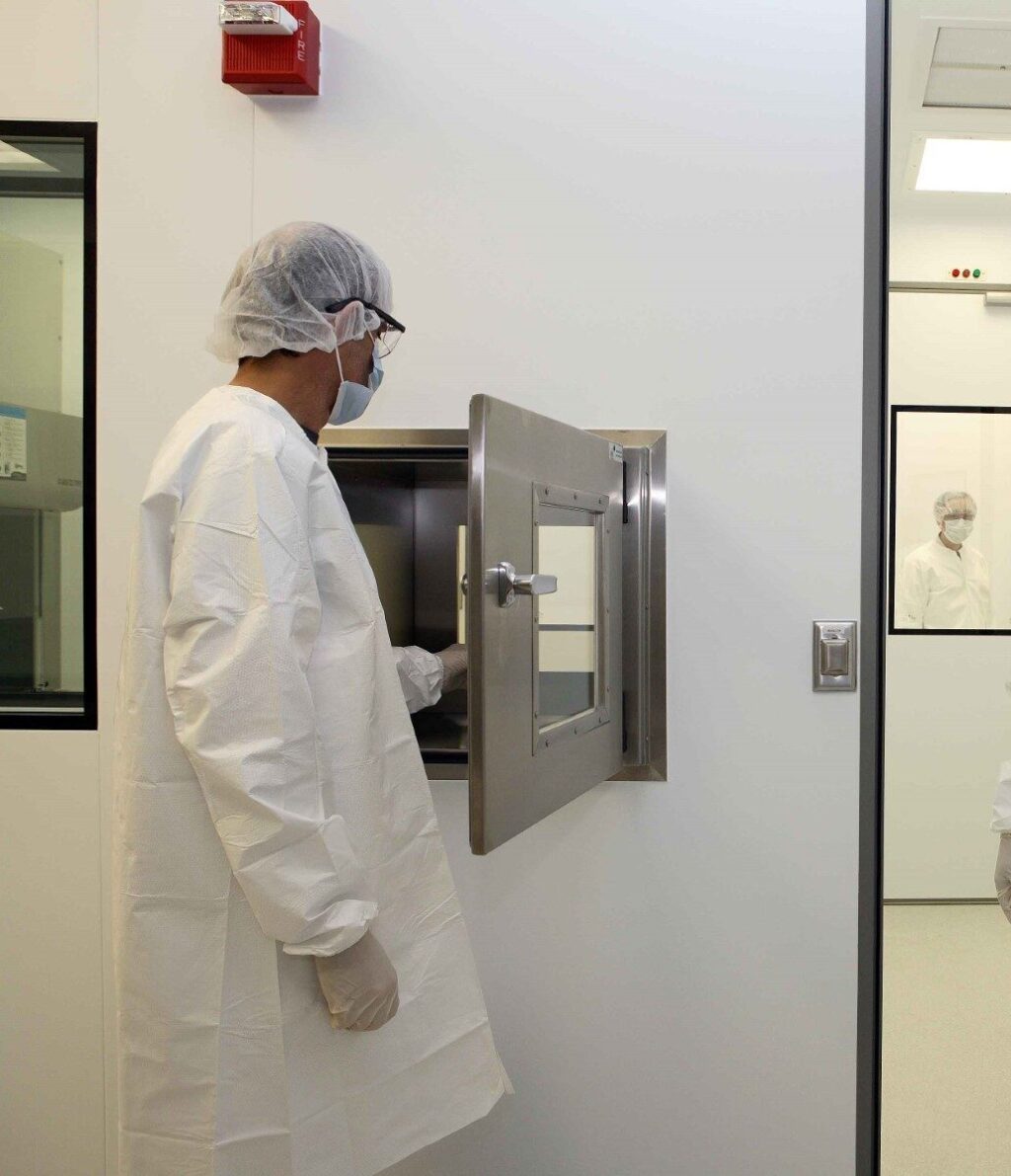
Gowning areas should provide a logical transition from uncontrolled to controlled spaces. Material transfer areas should support staging, wipe-down, decontamination, pass-throughs, and controlled movement into the cleanroom.
Important design considerations include:
- Proper gowning sequence
- Adequate space for personnel movement
- Physical or visual separation between zones
- Material airlocks and pass-throughs
- Clear incoming and outgoing material routes
- Waste removal pathways
- Space for carts, totes, and equipment movement
- Door sizes and turning clearances
Material flow should be planned early because it affects room sizing, corridor widths, door locations, pressure relationships, and operational efficiency. AES’s off-site cleanroom manufacturing approach supports fabrication of modular cleanroom components in a controlled environment before installation.
- Environmental Monitoring and Documentation
A cGMP cleanroom should be designed to support environmental monitoring, qualification, validation, and documentation. These requirements should not be treated as afterthoughts.
Design teams should consider:
- Viable and non-viable monitoring locations
- Pressure, temperature, and humidity monitoring
- Sensor placement
- Alarm strategy
- Data collection and trending
- Calibration access
- Building management system integration
- Qualification and validation support
- As-built documentation
- Maintenance records
- Change control needs
Documentation may include user requirements, basis of design, commissioning records, IQ/OQ/PQ support, environmental monitoring plans, cleaning procedures, maintenance procedures, calibration records, material certificates, and turnover packages.
A facility that is difficult to document is often difficult to defend. Reviewing completed cleanroom projects can help teams evaluate how design-build capabilities translate into real-world cleanroom outcomes.
- Maintenance and Lifecycle Performance
cGMP compliance does not end after installation. A cGMP facility must continue to perform as intended over time.
Maintenance and serviceability should be designed into the facility from the beginning. This includes filter access, seal inspections, pressure verification, airflow testing, sensor calibration, utility maintenance, door and hardware service, cleaning compatibility, spare parts, change control, and future modification needs.
If routine maintenance requires frequent disruption to controlled areas, the facility may create unnecessary operational risk. A proactive cleanroom service and maintenance program can help protect performance, reduce downtime, and support long-term cleanroom reliability.
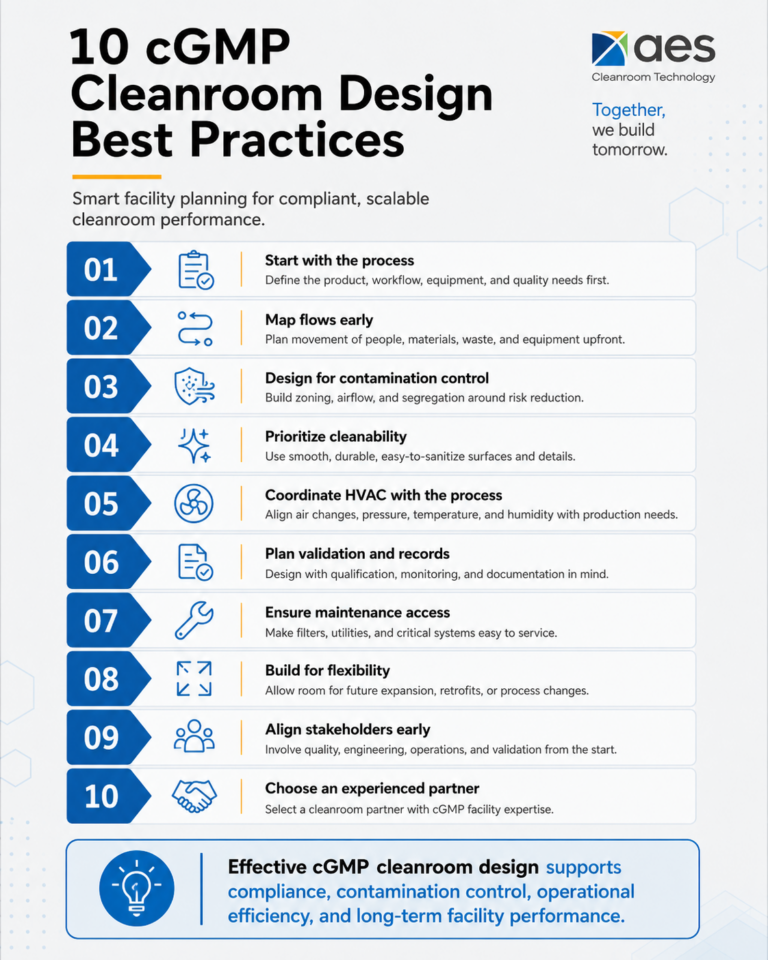
cGMP Cleanroom Design Best Practices
Designing a cGMP cleanroom requires coordination across process, quality, engineering, operations, validation, facilities, and construction teams. The following best practices can help reduce risk:
- Start with the process. Design around the product, equipment, operators, materials, utilities, and quality requirements.
- Define flows early. Map personnel, material, product, equipment, waste, and maintenance flows before finalizing the layout.
- Build contamination control into the design. Let contamination risks guide zoning, pressure cascades, finishes, monitoring, and cleaning access.
- Design for cleanability. Select walls, ceilings, doors, windows, penetrations, and transitions that support cleaning and disinfection.
- Coordinate HVAC with the process. HVAC should support classification, pressure control, humidity, temperature, recovery, and process risk.
- Plan for documentation. Qualification, validation, commissioning, and turnover requirements should be considered early.
- Design for maintenance access. Filters, sensors, utilities, panels, and equipment should be serviceable without unnecessary disruption.
- Build in flexibility. Modular cleanroom design can support future expansion, retrofit, and process changes.
- Align stakeholders early. Quality, operations, engineering, validation, and facilities teams should be involved from the start.
- Choose an experienced cleanroom partner. A cGMP cleanroom project requires understanding how design decisions affect compliance, contamination control, and lifecycle performance.
Common cGMP Facility Design Mistakes to Avoid
Common cleanroom design mistakes include designing around ISO classification alone, underestimating personnel and material flow, placing airlocks or pass-throughs in poor locations, treating HVAC as only a comfort system, overlooking pressure cascades, selecting difficult-to-clean materials, planning environmental monitoring too late, and underestimating documentation needs.
Avoiding these issues requires early planning and a design approach grounded in the realities of cGMP operations.
The Bottom Line: cGMP Compliance Starts With Facility Design
A cGMP facility is not simply a clean space. It is a controlled manufacturing environment designed to support product quality, contamination control, regulatory expectations, and long-term operational performance.
A strong cGMP cleanroom should support:
- Proper personnel and material flow
- Effective contamination control
- HVAC and pressure control
- Cleanable and durable materials
- Environmental monitoring
- Qualification and validation
- Documentation and data integrity
- Maintenance and lifecycle performance
- Future flexibility
For manufacturers planning a new cleanroom, expanding production capacity, or modernizing an existing facility, cGMP compliance should be considered from the earliest stages of facility planning.
To discuss a new facility, expansion, retrofit, or cleanroom upgrade, contact AES Cleanroom Technology.
FAQ: Designing for cGMP Compliance
What is cGMP compliance?
cGMP compliance refers to meeting current Good Manufacturing Practice expectations for facilities, systems, processes, controls, documentation, and quality oversight. In cleanrooms, this includes facility design, contamination control, HVAC performance, monitoring, cleaning, validation support, and lifecycle maintenance.
What makes a facility cGMP compliant?
A cGMP compliant facility is designed and operated to support consistent product quality and contamination control. It should include suitable layout, construction, HVAC, cleanable surfaces, controlled flows, proper documentation, and ongoing monitoring and maintenance.
What is a cGMP facility?
A cGMP facility is a manufacturing or controlled environment designed to meet current Good Manufacturing Practice expectations. cGMP facilities are common in pharmaceutical, biotechnology, biologics, cell and gene therapy, medical device, and other regulated manufacturing applications.
What is a cGMP environment?
A cGMP environment is a controlled space that supports regulated manufacturing requirements. It may include cleanrooms, airlocks, gowning areas, material transfer rooms, processing suites, and support spaces designed to reduce contamination risk and support product quality.
What is a cGMP cleanroom?
A cGMP cleanroom is a cleanroom designed, built, operated, and maintained to support current Good Manufacturing Practice expectations, including contamination control, environmental monitoring, cleaning, personnel and material flow, documentation, and ongoing performance.
Is an ISO-classified cleanroom automatically cGMP compliant?
No. ISO classification measures airborne particle cleanliness, while cGMP compliance includes broader requirements for facility design, contamination control, documentation, quality systems, process support, and ongoing monitoring.
What are the most important cGMP cleanroom design requirements?
Important requirements include proper layout, zoning, pressure cascades, HVAC design, cleanable materials, gowning areas, material transfer strategy, environmental monitoring, utilities, qualification support, documentation, and maintenance access.
Why is HVAC important in a cGMP cleanroom?
HVAC supports particle control, microbial control, temperature, humidity, airflow direction, room recovery, and pressure relationships. In a cGMP cleanroom, HVAC should be designed around the process and contamination control strategy.
How does modular cleanroom design support cGMP compliance?
Modular cleanrooms can support cGMP compliance by providing consistent cleanroom envelope systems, controlled component manufacturing, faster installation, reduced disruption, cleanable finishes, and flexibility for future expansion or modification.
Sources
- FDA — Facts About the Current Good Manufacturing Practice
- FDA — Current Good Manufacturing Practice Regulations
- FDA — Quality Systems Approach to Pharmaceutical Current Good Manufacturing Practice Regulations
- eCFR — 21 CFR Part 210
- eCFR — 21 CFR Part 211
- eCFR — 21 CFR Part 211 Subpart C: Buildings and Facilities
- ISO — ISO 14644-1:2015 Cleanrooms and Associated Controlled Environments