






Factory Acceptance Testing, often shortened to FAT testing, is a critical quality control step before cleanroom systems, components, equipment, or modular assemblies leave the manufacturing environment. For cleanroom projects, FAT helps verify that key systems have been built, assembled, inspected, and documented against approved requirements before shipment to the project site.
In regulated pharmaceutical, biotechnology, life science, medical device, and advanced manufacturing environments, cleanroom performance depends on details. Wall panels, ceilings, doors, windows, utilities, raceways, lighting, filtration components, controls, and mechanical interfaces must work together to support the intended cleanroom environment.
That is why FAT should not be treated as a formality. When performed well, Factory Acceptance Testing helps identify issues earlier, reduce field rework, improve documentation, and support a smoother transition from manufacturing to installation, site acceptance testing, commissioning, and cleanroom testing.
For organizations planning modular cleanroom projects, AES Clean Technology’s off-site cleanroom manufacturing approach helps shift critical fabrication and quality control activities into a controlled manufacturing environment before installation begins. For teams evaluating broader compliance planning, our related resource on designing for cGMP compliance explains how layout, HVAC, contamination control, validation, and lifecycle performance should be considered early in cleanroom facility planning.
Key Takeaways
- FAT testing verifies quality before shipment, helping teams identify issues before cleanroom systems arrive on-site.
- Factory Acceptance Testing can support cleaner installation, stronger documentation, and improved project readiness.
- FAT does not replace site acceptance testing, commissioning, qualification, or ongoing cleanroom testing.
- A strong FAT process should be tied to approved project requirements, drawings, specifications, quality documents, and acceptance criteria.
- For modular cleanroom projects, off-site fabrication can make FAT more effective by allowing components and assemblies to be reviewed in a controlled environment.
On This Page
- What Is Factory Acceptance Testing?
- Why FAT Testing Matters for Cleanroom Quality Control
- FAT Testing vs. Cleanroom Testing
- What Should Be Included in a Cleanroom FAT?
- Factory Acceptance Testing Checklist
- FAT Testing Best Practices
- Common FAT Testing Mistakes
- FAQ
- Sources
What Is Factory Acceptance Testing?
Factory Acceptance Testing is a structured pre-shipment verification process performed at the manufacturer’s facility. The purpose is to confirm that cleanroom systems, modular assemblies, equipment, or components have been manufactured and assembled according to approved requirements before they are shipped to the customer site.
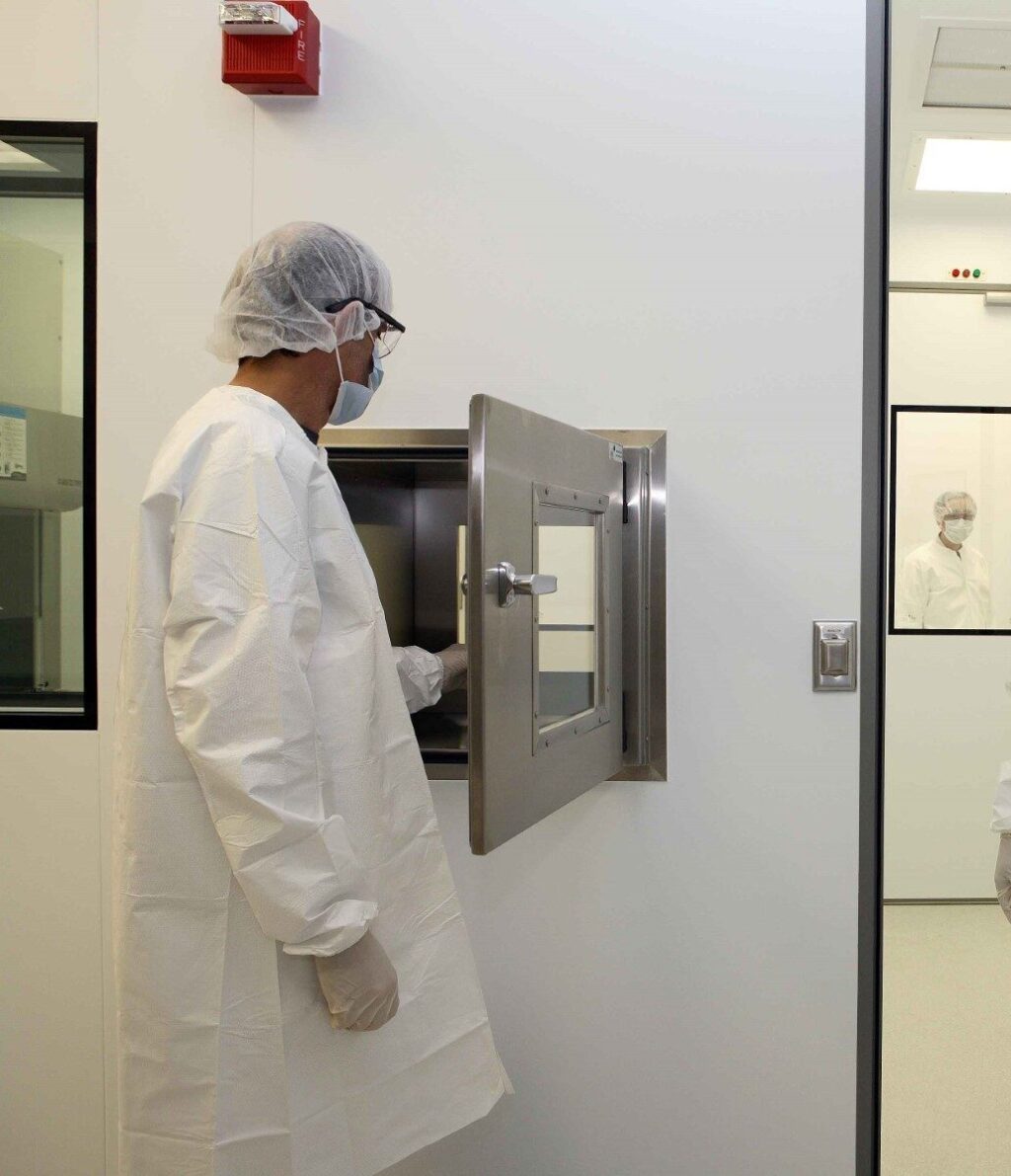
In cleanroom projects, FAT may include visual inspections, dimensional checks, component verification, functional testing, documentation review, labeling checks, packaging review, and punch list development.
The exact FAT scope depends on the project. A FAT for modular wall and ceiling systems will look different from a FAT for process utility raceways, electrical raceways, environmental monitoring components, mechanical systems, or specialized cleanroom equipment.
At its core, FAT answers a simple but important question:
Is this cleanroom system ready to ship, install, and move into the next phase of project execution?
Why FAT Testing Matters for Cleanroom Quality Control
Cleanroom projects often operate under tight timelines, strict quality expectations, and complex coordination requirements. Finding problems after equipment or cleanroom assemblies arrive on-site can create delays, added costs, installation conflicts, and documentation gaps.
FAT testing supports quality control by moving key inspections and verification activities earlier in the project lifecycle.
A strong FAT process can help teams:
- Confirm that components match approved drawings and specifications
- Identify defects before shipment
- Reduce field rework
- Improve installation readiness
- Review documentation before turnover
- Verify labeling, packaging, and shipment preparation
- Align project stakeholders before site work begins
- Build confidence before commissioning and cleanroom testing
For modular cleanroom projects, FAT is especially valuable because many components are manufactured off-site before being assembled at the final facility. AES’s modular cleanroom solutions are designed to support regulated environments where precision, consistency, and speed matter.
For teams still building their understanding of regulated cleanroom terminology, our related guide on cGMP vs GMP in cleanrooms explains why “current” Good Manufacturing Practice expectations matter for facility design, contamination control, validation, and long-term performance.
FAT Testing vs. Cleanroom Testing: What Is the Difference?
FAT testing and cleanroom testing are related, but they are not the same.
FAT testing happens before shipment, usually at the manufacturer’s facility. It verifies that systems, components, or assemblies meet approved requirements before they leave the factory.
Cleanroom testing typically happens after installation or during qualification and operation. It may include tests related to airborne particle counts, airflow, pressure differentials, HEPA filter integrity, temperature, humidity, recovery, smoke studies, noise, lighting, and other performance requirements.
In other words:
FAT helps verify that the system is ready to ship. Cleanroom testing verifies that the installed environment performs as intended.
FAT does not replace site acceptance testing, commissioning, installation qualification, operational qualification, performance qualification, or ongoing monitoring. Instead, it helps improve readiness for those later steps.
For teams still building their understanding of facility expectations, AES’s related resource on designing for cGMP compliance explains how layout, HVAC, contamination control, validation, and lifecycle performance should be considered early in cleanroom planning.
What Should Be Included in a Cleanroom FAT?
A cleanroom FAT should be based on approved project requirements and acceptance criteria. The scope should be agreed upon before the test, and results should be documented clearly.
Common FAT elements may include:
1. Drawing and Specification Review
The FAT process should confirm that the manufactured components or assemblies align with approved drawings, submittals, specifications, and project requirements.
This may include reviewing:
- Approved drawings
- Bill of materials
- Equipment lists
- Panel layouts
- Door and window schedules
- Utility requirements
- Finish requirements
- Critical dimensions
- Change orders or approved revisions
2. Visual Inspection
Visual inspection helps confirm that components are clean, complete, and free from visible defects before shipment.
This may include checking:
- Surface finishes
- Panels and frames
- Doors and windows
- Gaskets and seals
- Hardware
- Utility raceways
- Lighting fixtures
- Labels and tags
- Protective packaging
- General workmanship
For cleanroom environments, visible quality matters because defects, gaps, damage, or poor fit-up can create downstream installation and performance issues.
3. Dimensional and Fit-Up Checks
Dimensional verification helps confirm that components match approved drawings and will fit properly during installation.
This may include:
- Panel dimensions
- Opening sizes
- Door and window locations
- Utility penetrations
- Raceway dimensions
- Ceiling grid compatibility
- Interface points
- Critical tolerances
For modular cleanrooms, fit-up checks are especially important because system components must come together efficiently once they arrive on-site.
4. Component and Assembly Verification
A FAT should verify that the correct components have been installed or prepared for shipment.
This can include:
- Wall and ceiling panels
- Doors and windows
- Lighting
- Fan/filter units or filter housings
- Electrical raceways
- Process utility raceways
- Controls or monitoring components
- Gaskets, seals, and trim
- Hardware and accessories
AES’s modular cleanroom walls and ceilings support cleanroom retrofits, expansions, and new construction with prefabricated systems designed for cleanroom-ready environments.
5. Functional Testing Where Applicable
Some cleanroom systems or components may require functional verification during FAT.
Depending on project scope, this could include:
- Door operation
- Interlock functionality
- Lighting checks
- Electrical continuity
- Control panel operation
- Utility raceway checks
- Alarm or signal verification
- Fan/filter unit checks
- Basic sequence-of-operation review
Functional testing should be tied to approved acceptance criteria so results are clear, repeatable, and documented.
6. Documentation Review
Documentation is a major part of FAT testing. Cleanroom quality control is not only about what is built. It is also about what can be verified.
FAT documentation may include:
- FAT protocol
- FAT test results
- Inspection records
- Deviation or punch list items
- Calibration records, where applicable
- Material or component documentation
- Certificates or compliance documentation
- Approved drawings
- Photos or inspection evidence
- Sign-off records
- Shipping release documentation
Strong documentation can support smoother commissioning, installation, and later qualification activities.
7. Packaging and Shipment Readiness
FAT should also confirm that components are properly protected for shipment. A cleanroom component can pass inspection and still be damaged if packaging, handling, or shipping preparation is not properly controlled.
Shipment readiness may include:
- Protective wrapping
- Labeling
- Crating
- Part identification
- Packing lists
- Handling instructions
- Damage prevention measures
- Delivery sequencing
- Site receiving requirements
For cleanroom projects, preserving component quality during shipping is part of protecting the project schedule and downstream installation quality.
Download the Factory Acceptance Testing Checklist
Use this 7-point FAT checklist to review drawings, inspections, dimensions, components, functional checks, documentation, packaging, and shipment readiness before cleanroom systems leave the manufacturing environment.
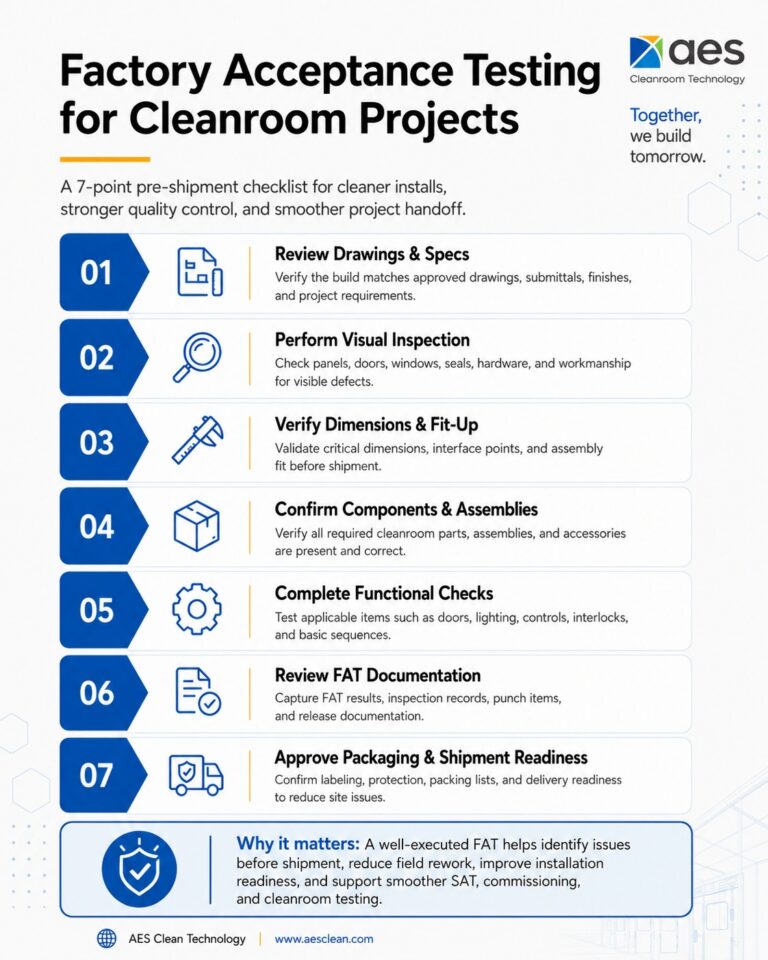
Fig. 1: Factory Acceptance Testing checklist for cleanroom projects, outlining seven pre-shipment quality control steps for drawings, inspections, fit-up, components, functional checks, documentation, packaging, and cleanroom testing readiness.
FAT Testing and Modular Cleanroom Manufacturing
Factory Acceptance Testing is especially valuable for modular cleanroom projects because more work can be completed before components arrive at the site.
With modular cleanroom construction, components are manufactured in a controlled factory environment and then installed at the final facility. This can create opportunities for earlier quality checks, better coordination, cleaner installation, and reduced site disruption.
AES’s off-site cleanroom manufacturing approach supports controlled fabrication, parallel workflows, and quality assurance before cleanroom components arrive on-site.
FAT can help verify that modular cleanroom components are built correctly, organized properly, documented thoroughly, and ready for efficient installation.
FAT vs. SAT: Why Both Matter
FAT and SAT serve different purposes.
Factory Acceptance Testing happens before shipment. It confirms that the system, component, or assembly meets agreed requirements at the factory.
Site Acceptance Testing, often called SAT, happens after delivery and installation. It confirms that the system is installed correctly, connected properly, and functioning in the actual site environment.
Both are important because some issues can only be checked at the factory, while others can only be verified after installation.
FAT can help prevent avoidable site issues, while SAT helps confirm that the installed system works with site utilities, surrounding systems, environmental conditions, and operating procedures.
FAT Testing Best Practices for Cleanroom Projects
A strong FAT process should be planned before the test begins. The more clearly the project team defines expectations, the more useful the FAT will be.
Recommended FAT testing best practices include:
- Define acceptance criteria early. Everyone should know what will be tested and what passing looks like.
- Tie the FAT to approved requirements. Use approved drawings, specifications, and project documentation as the baseline.
- Include the right stakeholders. Quality, engineering, manufacturing, project management, validation, and the client team may all need visibility.
- Document results clearly. Record what was tested, what passed, what failed, and what requires follow-up.
- Track punch list items. Open items should have owners, due dates, and resolution status.
- Use photos when helpful. Visual evidence can support faster review and clearer turnover.
- Verify shipment readiness. Confirm labels, packaging, sequencing, and handling requirements before release.
- Connect FAT to downstream activities. FAT results should support installation, SAT, commissioning, and qualification planning.
- Avoid treating FAT as a checkbox. FAT should identify risks early, not simply confirm that a shipment can leave the factory.
- Maintain clean handoff documentation. The stronger the handoff, the smoother the next project phase is likely to be.
Common FAT Testing Mistakes to Avoid
FAT testing is most effective when it is specific, documented, and connected to project requirements. Common mistakes include:
- Waiting too long to define the FAT scope
- Testing against unclear acceptance criteria
- Reviewing documentation after the system ships
- Failing to include quality or validation stakeholders
- Not tracking punch list items formally
- Treating visual inspection as the entire FAT
- Overlooking packaging and shipping readiness
- Assuming FAT replaces SAT or cleanroom testing
- Not connecting FAT results to commissioning or qualification planning
Avoiding these mistakes helps make FAT a meaningful quality control step rather than a rushed pre-shipment review.
How FAT Supports Better Cleanroom Project Outcomes
A well-executed FAT can improve the full project lifecycle. It helps reduce uncertainty before shipment, creates a documented quality checkpoint, and allows teams to address issues before site work becomes more complex.
For cleanroom projects, FAT can support:
- Better manufacturing quality control
- Fewer surprises during installation
- Cleaner turnover documentation
- More efficient site acceptance testing
- Improved commissioning readiness
- Reduced rework
- Stronger stakeholder alignment
- Better protection of project timelines
FAT is not the final proof of cleanroom performance, but it is an important step in building confidence before installation and formal cleanroom testing.
The Bottom Line: FAT Testing Helps Verify Quality Before Shipment
Factory Acceptance Testing is a practical and valuable pre-shipment quality control step for cleanroom projects. It helps confirm that systems, components, and assemblies have been built according to approved requirements before they leave the manufacturing environment.
For modular cleanrooms, FAT can be especially useful because it allows teams to verify quality earlier, document readiness, resolve issues before shipment, and support a smoother transition to installation, SAT, commissioning, and cleanroom testing.
A strong FAT process should be clear, documented, requirement-based, and connected to the full project lifecycle.
For teams planning a modular cleanroom project, cleanroom expansion, or facility upgrade, contact AES Clean Technology to discuss design, manufacturing, construction, testing, and lifecycle support.
FAQ: Factory Acceptance Testing for Cleanrooms
What is FAT testing?
FAT testing, or Factory Acceptance Testing, is a pre-shipment verification process performed at the manufacturer’s facility. It confirms that systems, components, or assemblies meet approved project requirements before shipment to the customer site.
What is Factory Acceptance Testing in cleanroom projects?
In cleanroom projects, Factory Acceptance Testing verifies that cleanroom systems, modular assemblies, equipment, or components have been manufactured, inspected, documented, and prepared for shipment according to approved specifications and acceptance criteria.
Is FAT testing the same as cleanroom testing?
No. FAT testing happens before shipment and focuses on manufacturing quality, assembly, documentation, and shipment readiness. Cleanroom testing typically happens after installation and may include performance testing such as particle counts, airflow, pressure differentials, HEPA filter integrity, temperature, humidity, and recovery testing.
Why is FAT important for cleanroom quality control?
FAT supports cleanroom quality control by helping identify issues before systems arrive on-site. This can reduce field rework, improve documentation, protect project timelines, and support smoother installation and commissioning.
What should be included in a cleanroom FAT?
A cleanroom FAT may include drawing review, visual inspection, dimensional checks, component verification, functional testing, documentation review, punch list tracking, packaging review, and shipment readiness verification.
Does FAT testing replace SAT?
No. FAT does not replace Site Acceptance Testing. FAT verifies systems before shipment at the manufacturer’s facility, while SAT verifies installation and functionality in the actual site environment.
Does FAT testing replace cleanroom qualification?
No. FAT may support qualification readiness, but it does not replace commissioning, IQ, OQ, PQ, environmental monitoring, or ongoing cleanroom testing. FAT is one quality checkpoint within the broader project lifecycle.
Who should participate in FAT testing?
Depending on the project, FAT may involve manufacturing, quality, engineering, project management, validation, client representatives, and other technical stakeholders. The right participants should be defined during FAT planning.
When should FAT acceptance criteria be defined?
FAT acceptance criteria should be defined before testing begins. Criteria should be tied to approved project requirements, drawings, specifications, and quality documentation.
How does modular construction improve FAT testing?
Modular cleanroom construction can improve FAT testing by allowing cleanroom components and assemblies to be manufactured, inspected, documented, and organized in a controlled factory environment before shipment and installation.