






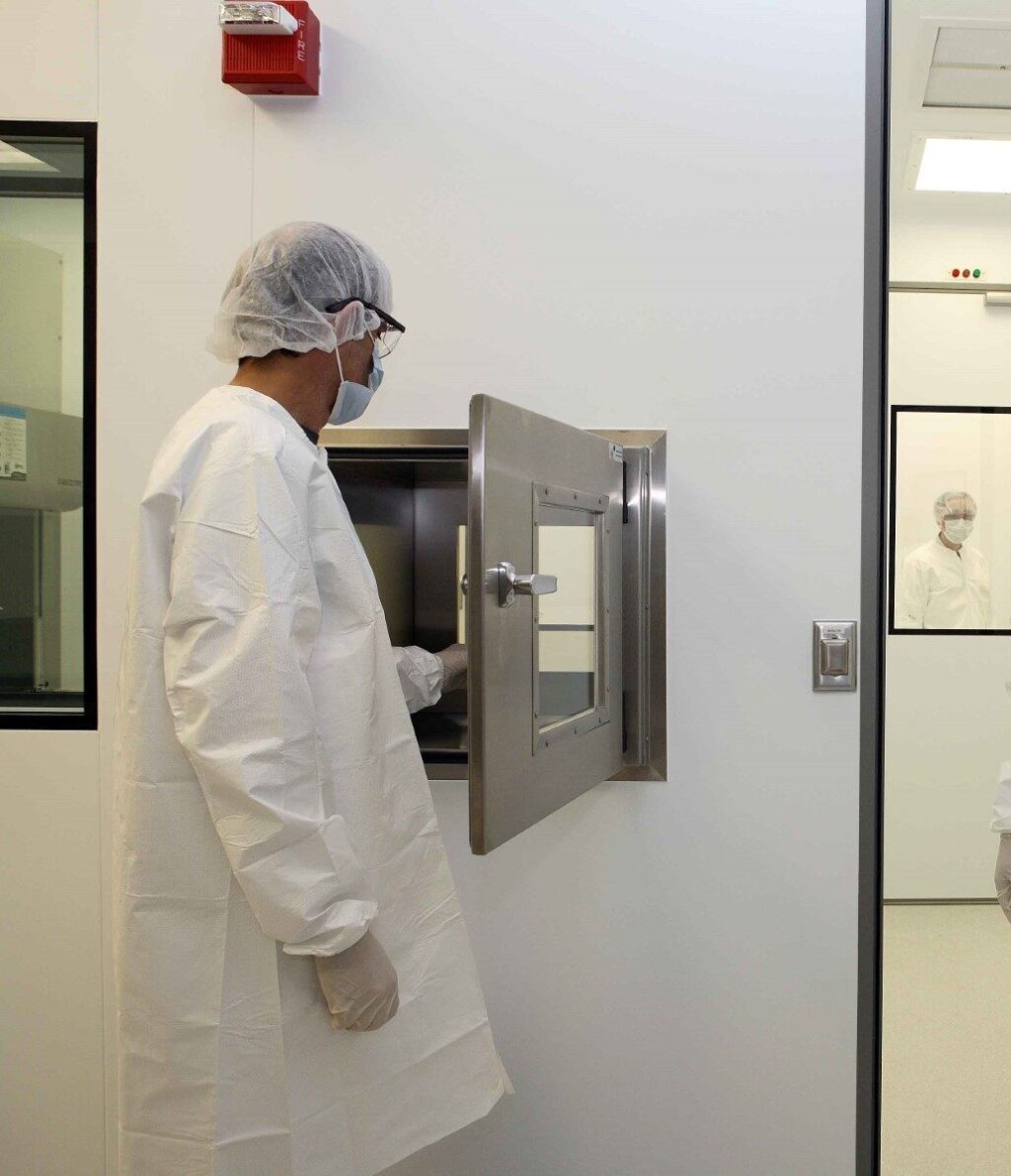


Cleanroom gowning requirements play a critical role in maintaining controlled manufacturing environments. Personnel are a major potential source of airborne particles and microorganisms, making properly selected cleanroom garments, documented gowning procedures, and consistent operator behavior essential to contamination control.
However, gowning protocols are not identical across cleanroom classifications. Requirements vary depending on ISO cleanliness levels, product exposure, manufacturing processes, contamination risks, and applicable regulations such as FDA current Good Manufacturing Practice (cGMP) requirements and EU GMP Annex 1.
Understanding how gowning expectations change across ISO Class 5, ISO Class 7, and ISO Class 8 environments can help manufacturers establish appropriate controls without unnecessarily complicating operations.
This technical guide explores classification-specific gowning considerations, garment selection, practical entry procedures, regulatory expectations, and facility-design best practices.
For organizations developing controlled manufacturing environments, AES Clean Technology’s architectural cleanroom design services help integrate gowning rooms, personnel flows, controlled transitions, and contamination prevention into the broader facility layout.
Key Takeaways
- Cleanroom gowning requirements are risk-based. ISO 14644-1 defines airborne particle classifications but does not prescribe one universal gowning ensemble for each ISO class.
- ISO 5, ISO 7, and ISO 8 environments may require different levels of personnel coverage, garment cleanliness, and operational control depending on the manufacturing process.
- ISO 14644-5:2025 establishes requirements for cleanroom operational control programs, including personnel management and gowning.
- Pharmaceutical GMP requirements can impose more specific gowning, sterilization, qualification, and personnel-monitoring expectations.
- A successful gowning protocol should address garment selection, changing-room layout, hand hygiene, dressing sequence, training, gown integrity, and garment lifecycle management.
- Proper gowning supports contamination control but does not replace effective HVAC, facility design, environmental monitoring, or process controls.
On This Page
What Is a Cleanroom Gowning Protocol?
A cleanroom gowning protocol is a documented set of procedures that defines the protective clothing, hygiene practices, dressing sequence, and personnel behaviors required before entering and working within a controlled environment.
Its purpose is to limit contamination introduced through:
- Skin and hair
- Clothing fibers
- Footwear
- Respiratory droplets
- Personal belongings
- Improper garment handling
- Personnel movement and interventions
A gowning protocol should be established around the cleanliness needs of the manufacturing process rather than based on ISO classification alone.
ISO 14644-5:2025 addresses operational control programs for cleanrooms, including gowning procedures, personnel training, cleaning, maintenance, and material movement.
For pharmaceutical manufacturing, 21 CFR 211.28 additionally requires appropriate clean clothing, protective apparel where necessary, and good personnel hygiene.
The distinction is important: a facility can achieve its specified airborne particle classification while still having inadequate personnel practices for the product being manufactured.
Cleanroom Gowning Requirements by ISO Classification
Understanding cleanroom gowning by classification helps manufacturers establish appropriate procedures for each controlled area.
ISO 14644-1 defines airborne particle concentration limits, but it does not mandate specific clothing combinations for ISO 5, ISO 7, or ISO 8.
The following table illustrates common risk-based gowning considerations rather than universal regulatory requirements.
ISO Cleanroom Gowning Comparison
| Classification | Typical Gowning Considerations | Primary Objective |
|---|---|---|
| ISO 8 | Hair covers, low-shedding garments, cleanroom footwear, and additional protection as process risk requires | Reduce contamination introduced through personnel and routine activities |
| ISO 7 | More comprehensive garment coverage may include hoods, coveralls, dedicated footwear, gloves, and masks where required | Maintain tighter particle control and protect sensitive operations |
| ISO 5 | Critical-zone protection may require sterile gowning, stringent aseptic technique, or barrier-system controls depending on the process | Protect highly contamination-sensitive operations and exposed sterile products |
ISO 8 Gowning Requirements
An ISO 8 cleanroom commonly supports controlled assembly, medical device manufacturing, diagnostics, and certain pharmaceutical support operations.
Typical gowning programs may include hair and beard covers, low-shedding garments, shoe covers or dedicated footwear, and gloves when warranted.
The exact requirements depend on product cleanliness specifications and contamination risks.
For more information on appropriate applications and facility controls, see AES’s ISO 8 cleanroom standards guide.
ISO 7 Gowning Requirements
ISO 7 gowning requirements may involve more complete personnel coverage to help maintain the stricter airborne particle limits associated with the classification.
Depending on the process, the gowning program may include cleanroom coveralls, hoods, dedicated footwear, gloves, and additional protective equipment.
However, an ISO 7 environment used for medical device manufacturing may have different gowning expectations than a pharmaceutical support area operating under GMP.
AES’s ISO 7 cleanroom requirements guide explores the relationship between gowning, facility design, HVAC, and operational control.
ISO 5 Gowning Requirements
ISO 5 cleanrooms and clean zones support highly contamination-sensitive operations, including critical aseptic pharmaceutical processing.
For exposed sterile product in conventional aseptic manufacturing, sterile garments, qualified aseptic personnel, and stringent contamination-control procedures may be necessary.
However, ISO 5 conditions are frequently maintained within localized critical zones, including isolators and Restricted Access Barrier Systems (RABS).
In these configurations, the gowning requirements for personnel depend on the surrounding cleanroom, barrier technology, interventions, and applicable GMP controls.
For a deeper breakdown, see AES’s ISO 5 cleanroom requirements guide.
Important: ISO classifications and pharmaceutical GMP grades should not be treated as interchangeable. ISO particle limits alone do not establish a complete garment or sterility-assurance strategy.
GMP Gowning Requirements for Grades A, B, C, and D
Pharmaceutical manufacturing introduces additional gowning considerations beyond ISO airborne particle classification.
Under EU GMP Annex 1, protective garments should be appropriate to the cleanliness grade and manufacturing activities, with additional expectations for sterile medicinal product manufacturing.
Grade A and Grade B Gowning
Grade A identifies critical zones used for high-risk aseptic operations. In conventional aseptic processing, Grade B commonly provides the surrounding background environment.
Operators entering Grade B or performing interventions into Grade A from Grade B are subject to stringent gowning requirements.
EU GMP Annex 1 describes protective clothing that includes:
- Sterilized, low-shedding cleanroom suits
- Sterile head coverings
- Sterile face masks
- Sterile eye coverings
- Sterile gloves
- Sterilized footwear or overboots
- Appropriate overlap between garments and gloves
Garments must be handled to avoid contaminating their outer surfaces, and personnel must be appropriately trained and qualified.
The use of isolators and other barrier systems may change personnel exposure and gowning strategies.
Grade C Gowning
For Grade C environments, Annex 1 describes garments that cover hair and facial hair, along with suitable low-shedding, high-neck clothing gathered at the wrists and appropriately disinfected footwear or overshoes.
Additional gloves or face coverings may be necessary depending on the contamination control strategy.
Grade D Gowning
Grade D environments generally require covered hair and facial hair, appropriate protective clothing, and disinfected footwear or overshoes.
Additional garments may be required when manufacturing activities create higher contamination risks.
GMP gowning programs should always consider the actual process, facility contamination control strategy, and personnel activities.
For more guidance on integrating contamination prevention into facility planning, explore AES’s on-demand webinar, Annex 1 in Practice: Turning CCS Into Cleanroom Design.
Choosing the Right Cleanroom Garments
Selecting appropriate cleanroom garments is an important part of any effective gowning protocol.
Garments should be evaluated for their ability to control particle shedding, provide suitable coverage, and withstand the cleaning or sterilization processes required by the application.
Garment Materials and Particle Shedding
Cleanroom garment selection should consider:
- Low particle-shedding characteristics
- Barrier performance
- Garment fit and coverage
- Durability
- Comfort and operator movement
- Compatibility with applicable cleaning processes
- Sterility where required
- Appropriate glove, hood, sleeve, and footwear interfaces
ISO 14644-18:2023 provides guidance on evaluating consumables for suitability in cleanroom environments, including personal consumables such as garments.
Reusable vs. Disposable Cleanroom Garments
Both reusable and disposable garments may be appropriate, depending on the process.
Reusable garments require controlled laundering, inspection, defined service life, and sterilization where applicable.
Disposable garments may reduce laundering needs but still require appropriate selection, handling, storage, and disposal.
The correct approach should reflect cleanliness requirements, contamination risks, lifecycle costs, and facility operating procedures.
Step-by-Step Cleanroom Gowning Protocol
A properly documented cleanroom gowning procedure should establish a consistent, repeatable entry process.
The following is a general framework. The exact sequence must be established through the facility’s approved standard operating procedures and applicable regulatory requirements.
- Prepare for entry. Remove prohibited personal items and verify that the required garments and supplies are available.
- Perform hand hygiene. Follow facility-specific handwashing or hand-disinfection procedures before handling clean garments.
- Establish the required footwear transition. Use designated benches, boundaries, and footwear controls as specified by the gowning procedure.
- Apply head and facial coverings. Don the required hair cover, beard cover, mask, or hood while minimizing contact with clean garment surfaces.
- Don cleanroom garments. Apply the prescribed suit, coat, or coverall using techniques that avoid contaminating outer surfaces or allowing garments to contact the floor.
- Complete gloves and garment interfaces. Apply gloves and any additional required protective equipment while maintaining appropriate coverage and garment overlap.
- Perform a final inspection. Confirm garment integrity, fit, coverage, and compliance with the required entry procedures before accessing the cleanroom.
For aseptic pharmaceutical manufacturing, sterile garment handling, gloving, personnel qualification, and disinfection requirements may be more rigorous.
The most effective gowning procedure is one that personnel can consistently perform without compromising garment cleanliness or introducing contamination.
Designing Gowning Rooms for Contamination Control
Gowning effectiveness depends not only on personnel behavior but also on the physical design of the changing environment.
Poorly designed gowning rooms can create congestion, unclear boundaries, unnecessary movement, and contamination risks.
Important facility considerations include:
- Logical clean-to-controlled transitions
- Defined separation of clean and used garments
- Adequate changing space
- Appropriate hand hygiene stations
- Benches and transition boundaries
- Clean garment storage
- Used garment collection
- Suitable doors and access controls
- Appropriate airflow and pressure relationships
- Cleanable wall, ceiling, and flooring systems
The design should make the correct gowning sequence intuitive and repeatable.
AES’s modular cleanroom windows and doors support controlled entry points with sealed construction and options for access controls and interlocks.
For larger facility projects, AES Box™ modular architectural systems provide integrated cleanroom envelopes that can support coordinated entry spaces, cleanable surfaces, and future reconfiguration.
Personnel Qualification and Gowning Monitoring
A documented gowning protocol should be supported by ongoing personnel training and qualification.
For aseptic pharmaceutical manufacturing, FDA guidance recommends that gowning qualification assess an operator’s ability to maintain garment cleanliness during the gowning process.
Depending on regulatory and process requirements, a qualification program may include:
- Initial gowning training
- Observed gowning demonstrations
- Personnel competency assessments
- Aseptic technique evaluations
- Microbiological sampling of garments and gloves
- Routine gown integrity checks
- Periodic requalification
- Investigation of gowning deviations
- Retraining following failures
Gown monitoring results and gowning observations can help identify trends that indicate a need for corrective action.
For regulated facilities, gowning should also be integrated into the broader contamination control strategy rather than managed as an isolated personnel activity.
AES’s resource on cleanroom cleaning and disinfection explores the relationship between facility design, contamination control, and long-term cleanroom operation.
Cleanroom Gowning Protocol Checklist
Before implementing or reviewing a cleanroom gowning program, confirm that the facility addresses these 10 considerations:
- Define the Zone and Risk: Identify cleanroom classification, product exposure, process requirements, and contamination risks.
- Create a Gowning Matrix: Specify required garments for each room, personnel role, and manufacturing activity.
- Choose Suitable Garments: Evaluate shedding, barrier performance, fit, comfort, and required sterility.
- Design the Gowning Area: Establish clean-to-controlled transitions, appropriate storage, and separation of clean and used garments.
- Standardize Entry Steps: Document hand hygiene, gowning sequence, garment handling, and transition boundaries.
- Train and Qualify Personnel: Verify gowning proficiency and aseptic technique where applicable.
- Inspect Fit and Integrity: Confirm appropriate garment coverage, component overlap, and condition before entry.
- Control the Garment Lifecycle: Define laundering, sterilization, storage, replacement, and disposal requirements as appropriate.
- Monitor Behavior and Compliance: Review personnel practices, interventions, and relevant monitoring results.
- Document and Improve: Maintain training records, deviations, corrective actions, and periodic requalification documentation.
Download the Cleanroom Gowning Protocol Checklist
Use this 10-point cleanroom gowning checklist as a practical reference for evaluating classification-specific garment requirements, gowning procedures, personnel training, changing-room design, contamination control, and ongoing compliance.
Designed for facility planners, engineers, quality teams, and manufacturing personnel, this downloadable resource helps establish consistent gowning practices and identify potential contamination risks before they affect cleanroom performance.

Common Cleanroom Gowning Mistakes
Even facilities with well-established operating procedures may experience gowning-related contamination risks.
Common mistakes include:
- Assuming ISO classification alone determines all gowning requirements
- Selecting garments without evaluating process risk
- Failing to define clear gowning transitions
- Handling garments in ways that contaminate outer surfaces
- Allowing garments to contact the floor
- Inadequate garment fit or component overlap
- Inconsistent hand hygiene and glove practices
- Neglecting gown inspections
- Reusing garments without justified controls
- Inadequate personnel training or requalification
- Failing to investigate recurring gowning deviations
Avoiding these issues requires coordinated facility design, documented procedures, personnel accountability, and ongoing contamination-control oversight.
The Bottom Line: Effective Gowning Starts With Process and Facility Design
Cleanroom gowning requirements are an important component of contamination control, but they should never be treated as a standalone checklist of protective clothing.
The strongest gowning programs coordinate:
- Cleanroom classification
- Product and process risk
- Garment selection
- Facility layout and gowning-room design
- Personnel training
- Documented gowning procedures
- Garment integrity
- Lifecycle management
- Qualification and monitoring
- Continuous improvement
For pharmaceutical and other regulated manufacturing environments, properly designed gowning areas can support cleaner transitions, more efficient operations, and stronger contamination-control programs.
AES Clean Technology helps manufacturers plan, design, and build controlled environments that integrate cleanroom architecture, process flow, HVAC, and operational requirements.
To discuss gowning-room design, cleanroom expansions, facility conversions, or modular cleanroom construction, contact AES Clean Technology.
FAQ: Cleanroom Gowning Requirements
What are cleanroom gowning requirements?
Cleanroom gowning requirements define the protective garments, hygiene procedures, entry practices, and personnel controls needed to minimize contamination in controlled environments. Requirements vary by process, cleanroom classification, and applicable regulations.
Does ISO 14644 specify exact cleanroom garments?
ISO 14644-1 does not prescribe a universal garment ensemble for each ISO class. ISO 14644-5:2025 addresses gowning programs as part of cleanroom operational controls, while industry-specific requirements may impose additional expectations.
What are ISO 8 gowning requirements?
ISO 8 gowning programs may include hair coverings, low-shedding garments, dedicated footwear, and additional protective equipment based on manufacturing risks. The exact ensemble should be defined by the facility’s operating procedures.
What are ISO 7 gowning requirements?
ISO 7 gowning may require more comprehensive personnel coverage, including cleanroom suits, hoods, footwear, and gloves. Actual requirements depend on product exposure, contamination risks, and regulatory expectations.
What are ISO 5 gowning requirements?
ISO 5 gowning depends on whether the clean zone is used for aseptic manufacturing, operates within a barrier system, or supports another highly controlled process. Sterile pharmaceutical operations may require sterilized garments and additional personnel qualification and monitoring.
What is the correct cleanroom gowning sequence?
A cleanroom gowning sequence generally includes preparation, hand hygiene, appropriate footwear transitions, application of head coverings and garments, glove placement, and final inspection. The exact order should follow the facility’s approved procedure.
Are cleanroom garments required to be sterile?
Not all cleanroom garments must be sterile. Sterility requirements depend on the manufacturing process, environmental grade, product exposure, and applicable regulations. Certain aseptic pharmaceutical operations require sterilized protective garments.
How often should cleanroom garments be replaced?
Garment replacement frequency should be defined through the facility’s quality system, garment qualification, manufacturer recommendations, and contamination risks. Damaged or compromised garments should be removed from use according to established procedures.
Why is gowning qualification important?
Gowning qualification verifies that personnel can correctly apply protective garments without compromising cleanliness. It is particularly important in aseptic processing, where improper gowning can introduce microbial contamination.
How does gowning-room design affect cleanroom compliance?
Gowning-room design influences personnel movement, clean and dirty transitions, garment handling, storage, hand hygiene, and access control. Well-designed entry spaces can reduce contamination risks and support repeatable gowning procedures.
Sources
- ISO — ISO 14644-1:2015, Classification of Air Cleanliness by Particle Concentration
- ISO — ISO 14644-5:2025, Cleanroom Operations
- ISO — ISO 14644-18:2023, Assessment of Suitability of Consumables
- FDA — 21 CFR § 211.28, Personnel Responsibilities
- FDA — Sterile Drug Products Produced by Aseptic Processing: Current Good Manufacturing Practice
- European Commission — EU GMP Annex 1: Manufacture of Sterile Medicinal Products